Choosing Finishes and Sheen for Family-Friendly Floors
Home should feel like a long exhale. The moment you open the door, you want an instant sense of welcome—something that nudges you to slow down, shrug off the day, and settle into a space that’s unmistakably yours. Few upgrades like Wood Floor Staining deliver that emotional hit as reliably as a beautifully timber floor. The tones underfoot set the whole room’s temperature—visually and psychologically—so conversations feel warmer, dinners linger longer, and those ordinary Tuesdays gain a surprising gloss of ceremony.
This article is a practical, straight-talking guide to bring that feeling to life. We’ll walk through colour psychology, preparation that actually matters, stain types (and when they shine), application techniques, maintenance that’s quick and realistic, and design ideas for every room. By the end, you’ll be confident choosing a tone that flatters your home and your lifestyle—so the floor looks richer, and your everyday moments feel richer too.
Why colour underfoot changes how your home feels
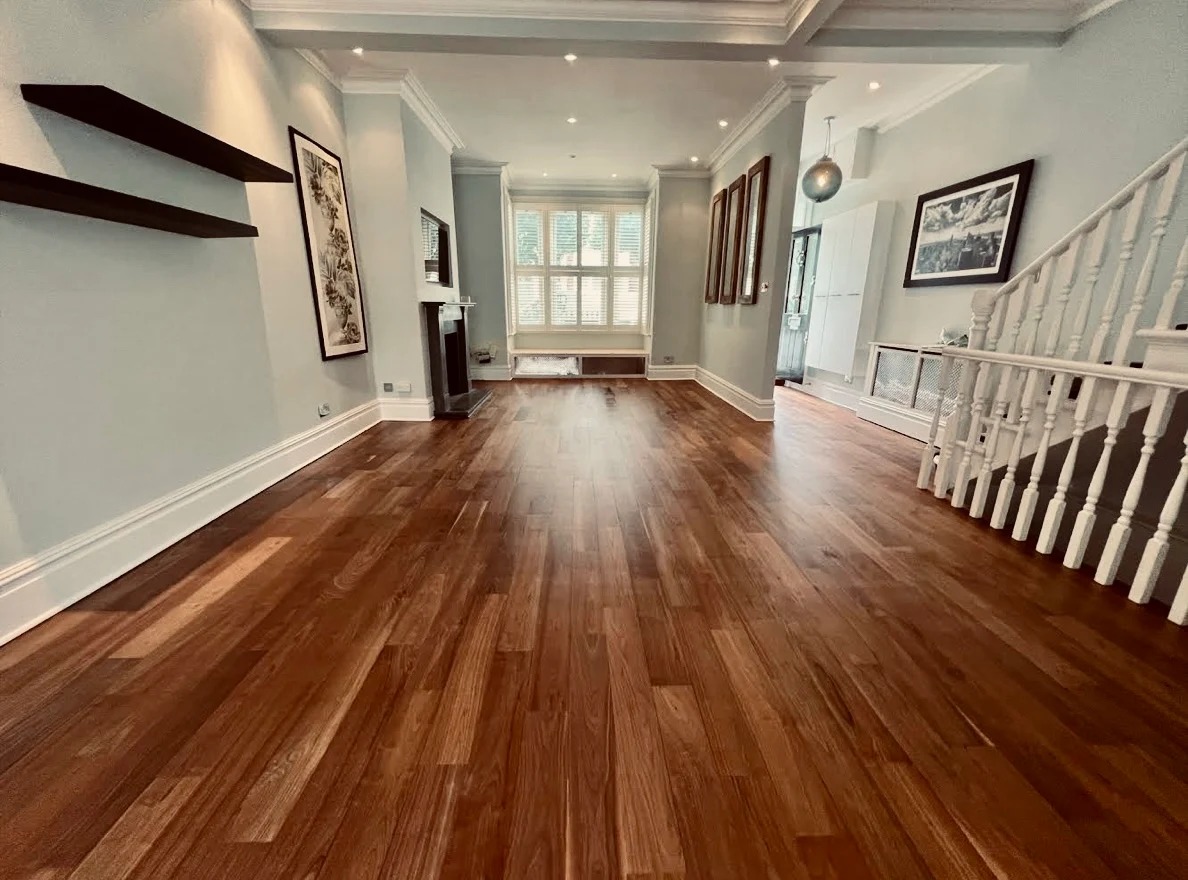
Paint colours get most of the attention, but the floor silently dominates your field of vision. Because it spans every room, it behaves like a “background soundtrack”: a warm mid-oak suggests cosiness and tradition, a cool neutral whispers calm, while a deep espresso frames furniture and artwork like a gallery wall. Crucially, floor tone influences perceived temperature. Warmer tints—honey, caramel, chestnut—make a big room feel more intimate. Cooler, paler tones—stone, mist, soft ash—make smaller spaces feel brighter, airier, and more modern.
Families often say the floor changed how they use their home. A bright, scuffed hallway that once felt like a corridor becomes a welcome, photo-worthy threshold. A living room that used to feel fidgety develops that “sit and stay” mood. The right tone also hides day-to-day life better—think school shoes, dog paws, Lego—so you spend less time fretting over every mark and more time enjoying the space.
First things first: assess your timber (and your light)
Before you start thinking in colour swatches, look at what you actually have:
- Species & age. Oak, pine, ash, maple, beech and walnut each accept pigment differently. Older boards can be slightly more porous and characterful, which often helps stains settle beautifully.
- Grain pattern. Strong grain (oak, ash) can carry darker colours well; subtler grain (maple, beech) suits lighter or neutral tones.
- Natural undertone. Even bare wood leans warm, cool, or neutral. Your chosen stain should harmonise with that direction rather than fight it.
- Daylight & artificial light. North-facing rooms skew cool blue; south-facing skew warm. LEDs and halogens also cast different temperatures. Always test swatches in the shadiest and brightest parts of the room.
Think of this as laying the groundwork for a tone that looks elegant in all your lighting, not just the Instagram moment at noon.
The family-friendly palette: tones that forgive real life
Perfection is a five-minute window on cleaning day. Real life is scuffs, crumbs, and muddy footballers. If you want your floor to look good most of the time with minimal fuss, lean towards:
- Medium, gently variegated tones. Honey-oak, classic chestnut, or muted walnut often hide traffic patterns better than super-light or near-black.
- Soft, desaturated neutrals. For a contemporary home, try pale taupe or a “smoked” beige-grey that reduces contrast with dust.
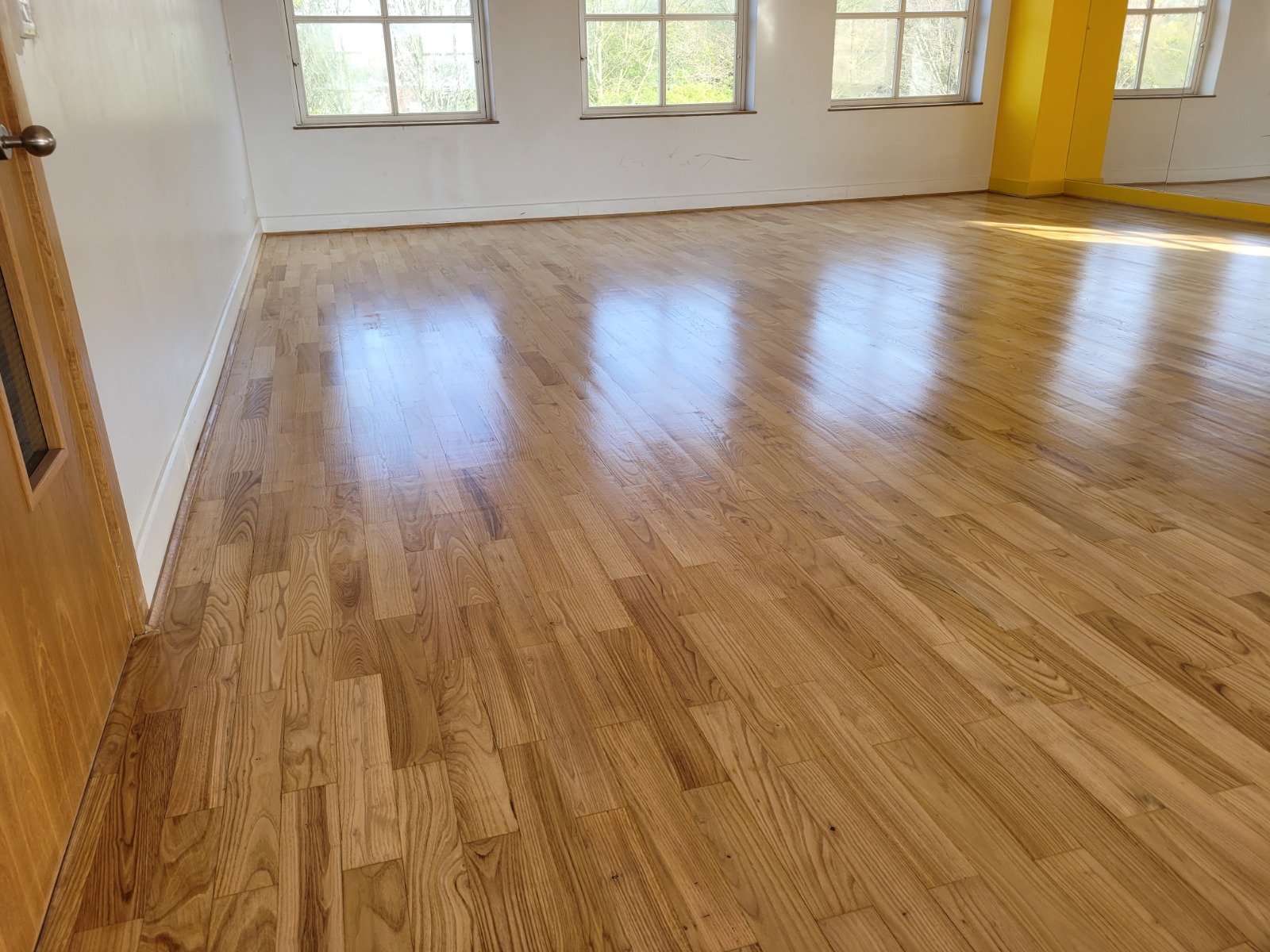
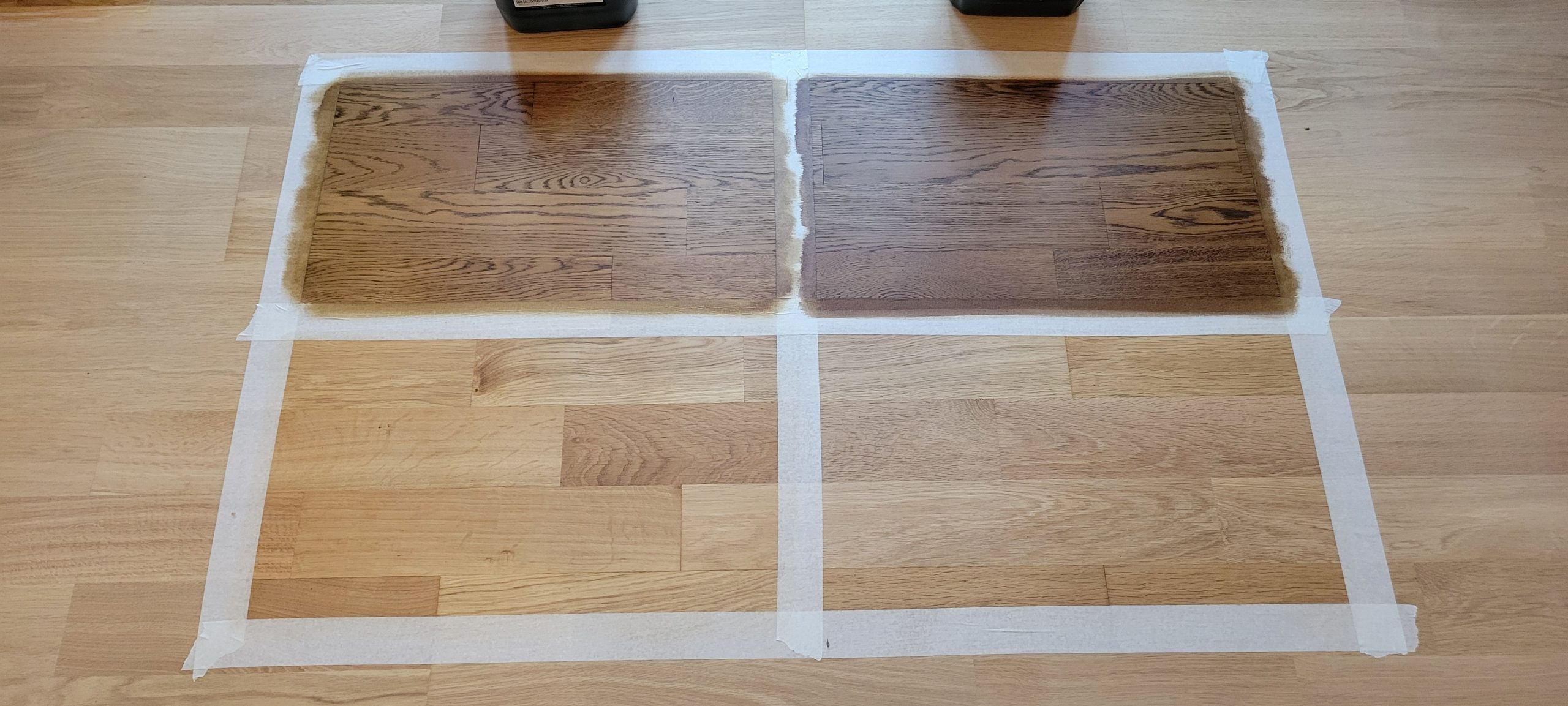
- Satin, not mirror-gloss. Sheen level changes perceived colour and the visibility of marks. Satin or low-sheen keeps things gracious and forgiving.
The psychology of warmth (and why it matters for family spaces)
A quick rule of thumb: if a room is where people gather—kitchen-diner, family lounge, hallway—choose a tone that suggests hospitality. Warm mid-tones encourage conversation and make food, textiles and even skin tones look richer. Cooler or very pale tones excel in bedrooms and studios where calm and clarity are the brief. If you want one continuous colour through the whole ground floor, choose an intelligent mid-tone that won’t fight your wall colours or your natural light.
Planning the look: from moodboard to mock-ups
Treat your floor like a large furniture purchase. Build a simple moodboard with:
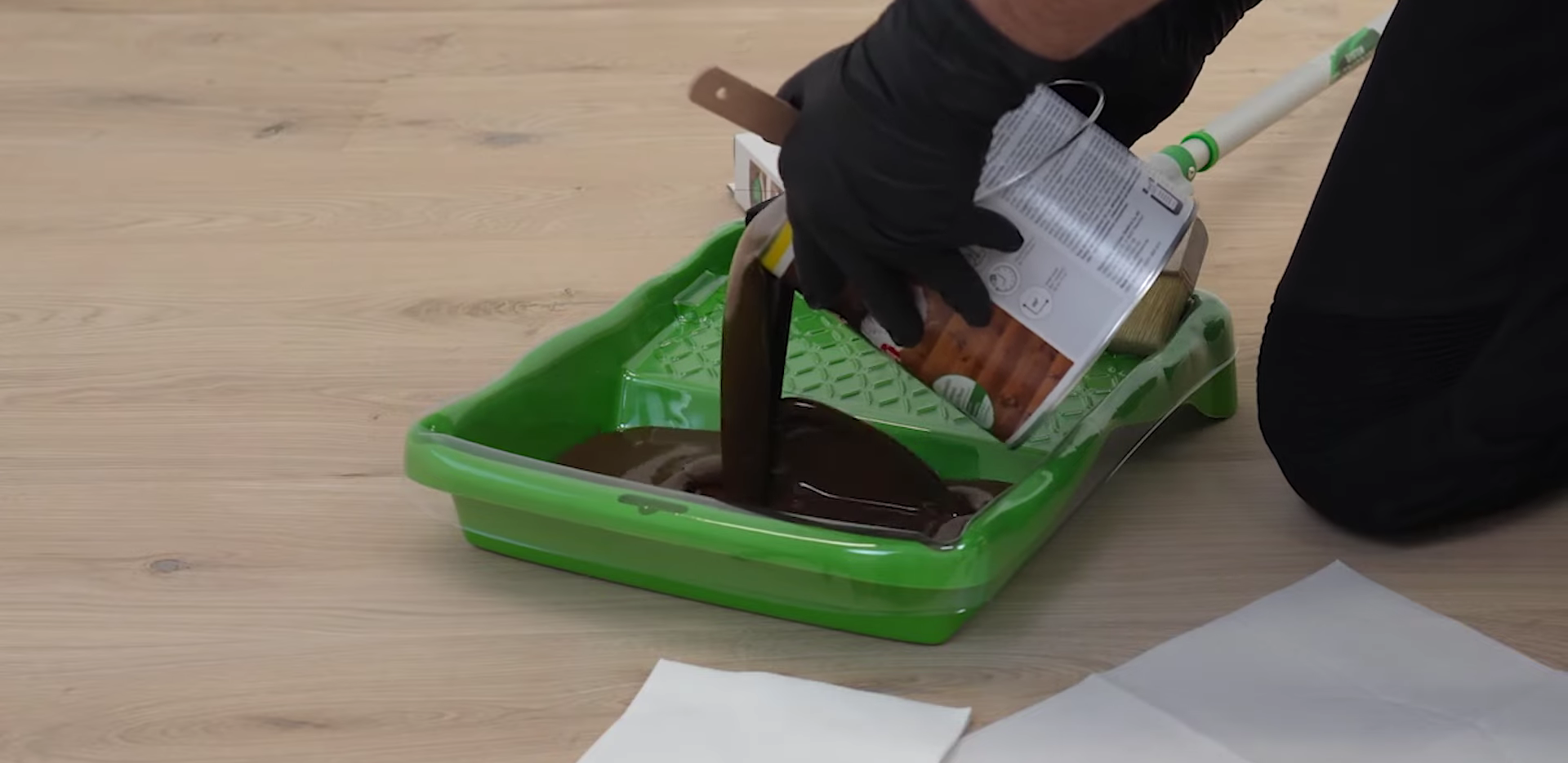
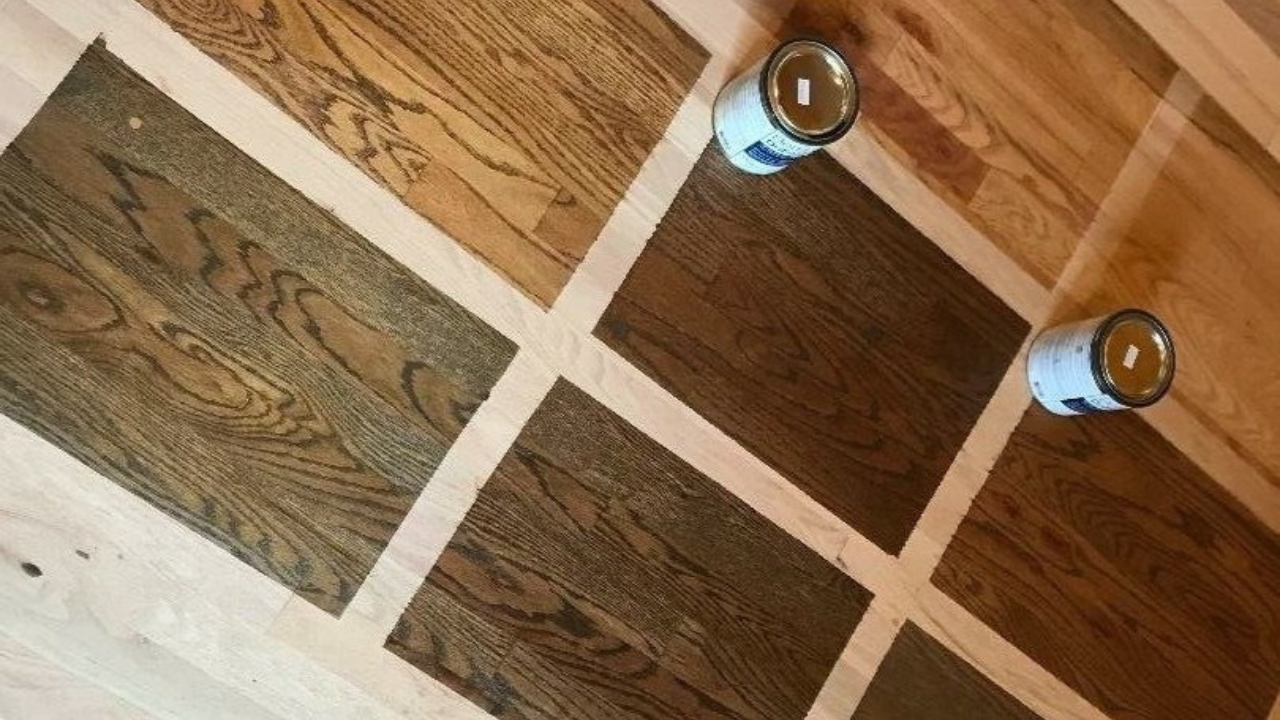
- Two or three stain swatches tested directly on your sanded boards (not just on pine offcuts if your floor is oak).
- Key textiles (a sofa fabric, rug sample, curtain swatch).
- A piece of your cabinetry or a paint card.
- A photo of your room in morning and evening light.
Stand back. Does the combination say “busy family home that still feels elegant”? If not, tweak the depth—often one notch lighter or darker is the entire difference between “fine” and “phenomenal”.
For many households, an elegant mid-range option—executed with meticulous Wood Floor Staining—is the Goldilocks choice: it flatters existing furniture, handles traffic gracefully, and feels cosy in winter without turning gloomy in summer.
Preparation: the “unseen” work that makes the colour sing
Any stain is only as good as the surface beneath it. The most professional results come from meticulous preparation:
- Repairs & gaps. Secure loose boards, replace broken ones with like-for-like timber, and decide whether to fill gaps (useful for draught-proofing and a smoother, more formal look).
- Progressive sanding. Move through grits methodically (e.g., 40 → 60 → 80 → 100/120) to remove old finish and flatten ridges while preserving the character. Edge and corner work is where amateurs rush—don’t.
- Dust control. Vacuum thoroughly, wipe with a tack cloth, and let dust settle. Tiny nibs become big blotches once pigment is applied.
- Water-pop (if required). Lightly misting the surface can raise the grain to help certain stains penetrate more evenly—especially on tighter-grained species. Test first.
Time spent here is money saved later. A properly prepared floor accepts colour evenly and needs fewer coats to achieve the look you want.

Stain systems: oil, water, reactive, and hybrid options
Not all colour systems behave the same. Choose based on your priorities.
- Oil-based stains.
- Pros: Longer open time (good for blending), deep, luxurious look, classic warmth.
- Cons: Longer drying, stronger odour, more sensitive to over-application.
- Best for: Traditional interiors, rich mid-to-dark tones.
- Water-based stains and pigments.
- Pros: Fast drying, low odour, great colour control, more eco-friendly options.
- Cons: Less time to blend; sometimes raises grain (sand back between coats).
- Best for: Contemporary neutrals, paler Scandinavian looks.
- Reactive stains (smoked/fumed effects).
- Pros: Chemical interaction with tannins gives complex, layered character that dye alone can’t mimic.
- Cons: Requires expertise; results vary by species, batch and technique.
- Best for: Character-forward oak with nuanced greys/browns.
- Hybrid systems & hardwax oils.
- Pros: Colour and protection combined; low sheen, tactile finish; easy localised maintenance.
- Cons: Fewer extremes of colour than separate stain + topcoat stacks.
- Best for: Family homes wanting durable, beautiful, low-sheen floors.
Whatever you choose, remember the finished look is the sum of the colour layer and the protective coats on top. Satin polyurethane over a pale pigment will look and wear differently to ultra-matt hardwax oil over the same colour—so always test the whole stack. The visible beauty is the teamwork of product and process, not just the headline step of Wood Floor Staining.
Sample like a pro (and avoid nasty surprises)
Sampling is where you eliminate 90% of risk:
- Use your actual boards. Offcuts from another species are misleading.
- Create postcard-size patches in multiple places—near windows, in shade, along the main walkway.
- Finish the samples properly. Apply the same seal/topcoat you intend to use; sheen and build alter perceived colour.
- Live with them for a week. Check morning, afternoon, and night under artificial light.
Take photos at different times. If a patch looks cool in the morning and a little warmer in the evening, that’s not a problem; that’s a floor with dimensionality rather than a flat, “painted” look.
Application techniques that earn a flawless finish
Even the right colour can look patchy if it’s applied haphazardly. Professionals obsess over detail so the eye never catches a seam.
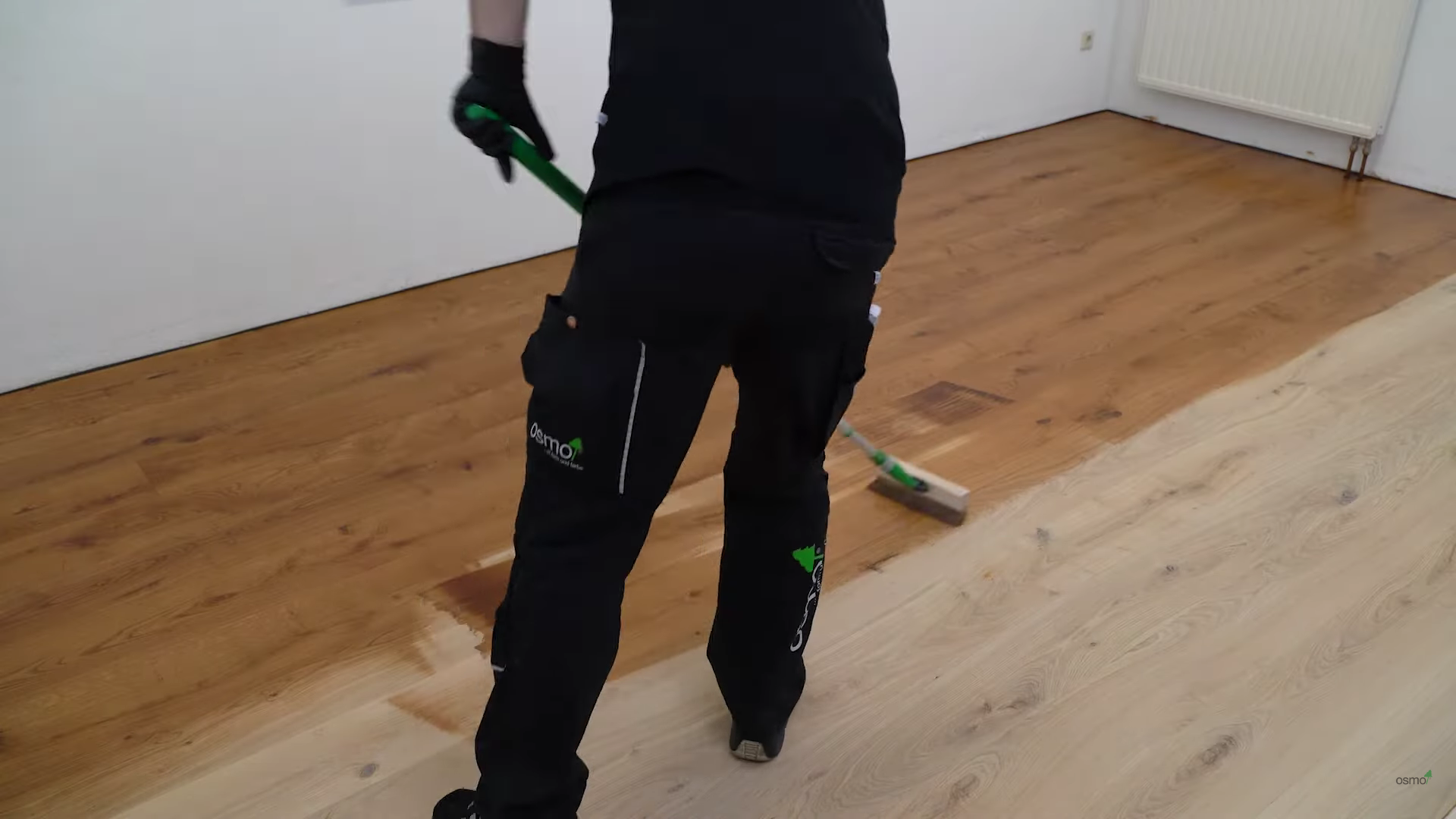
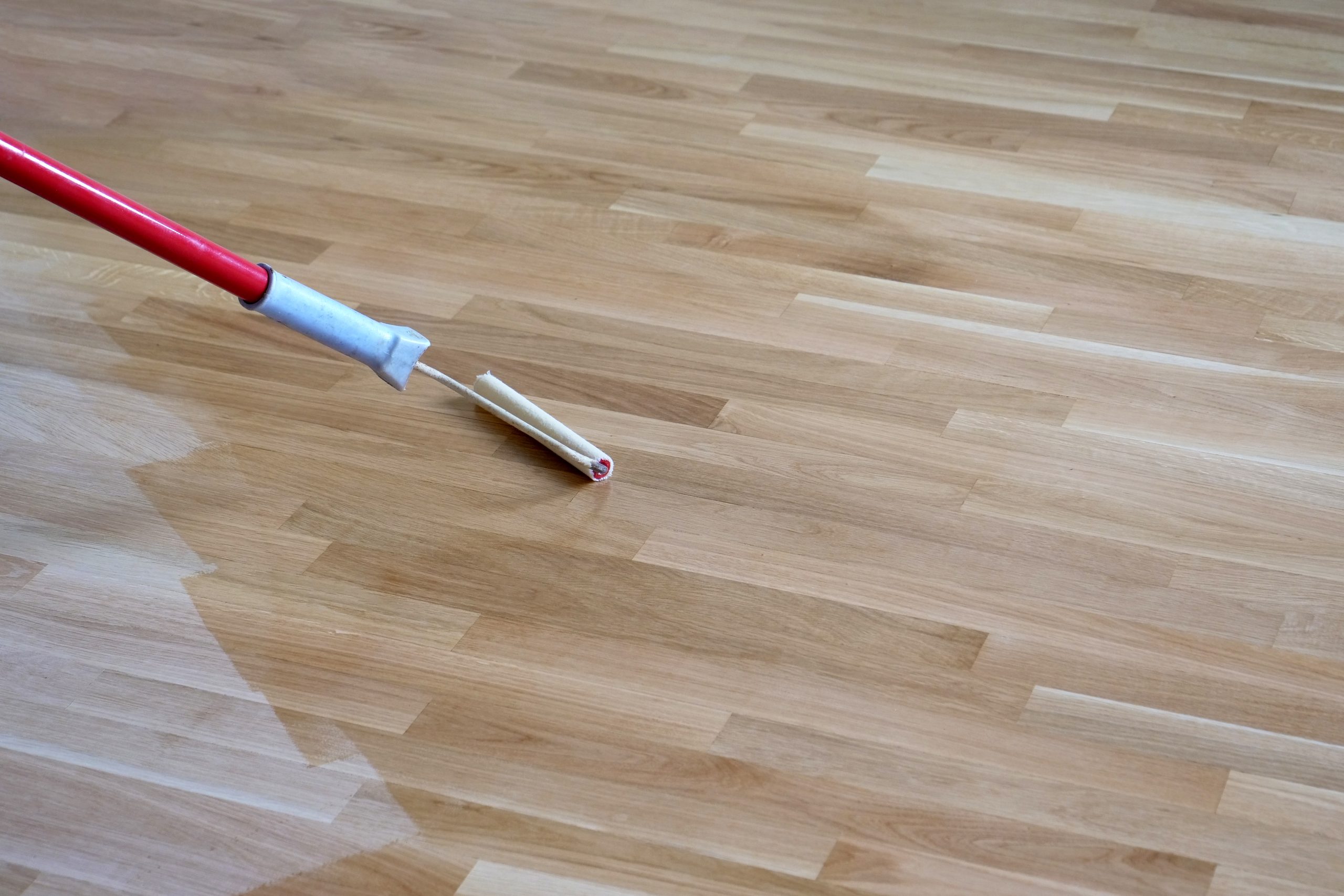
- Work in manageable sections. Think in lanes that follow the boards to maintain a wet edge.
- Feather edges. Overlap slightly into the next lane and blend to prevent lap lines.
- Wipe consistently. If the system calls for wiping excess, do it at the same interval throughout; timing alters depth.
- Mind the end grain. End grain drinks stain; pre-treat or apply carefully to avoid dark “bookends”.
- Control the room. Temperature, humidity and airflow affect open time. Close windows if draughts are speeding things up.
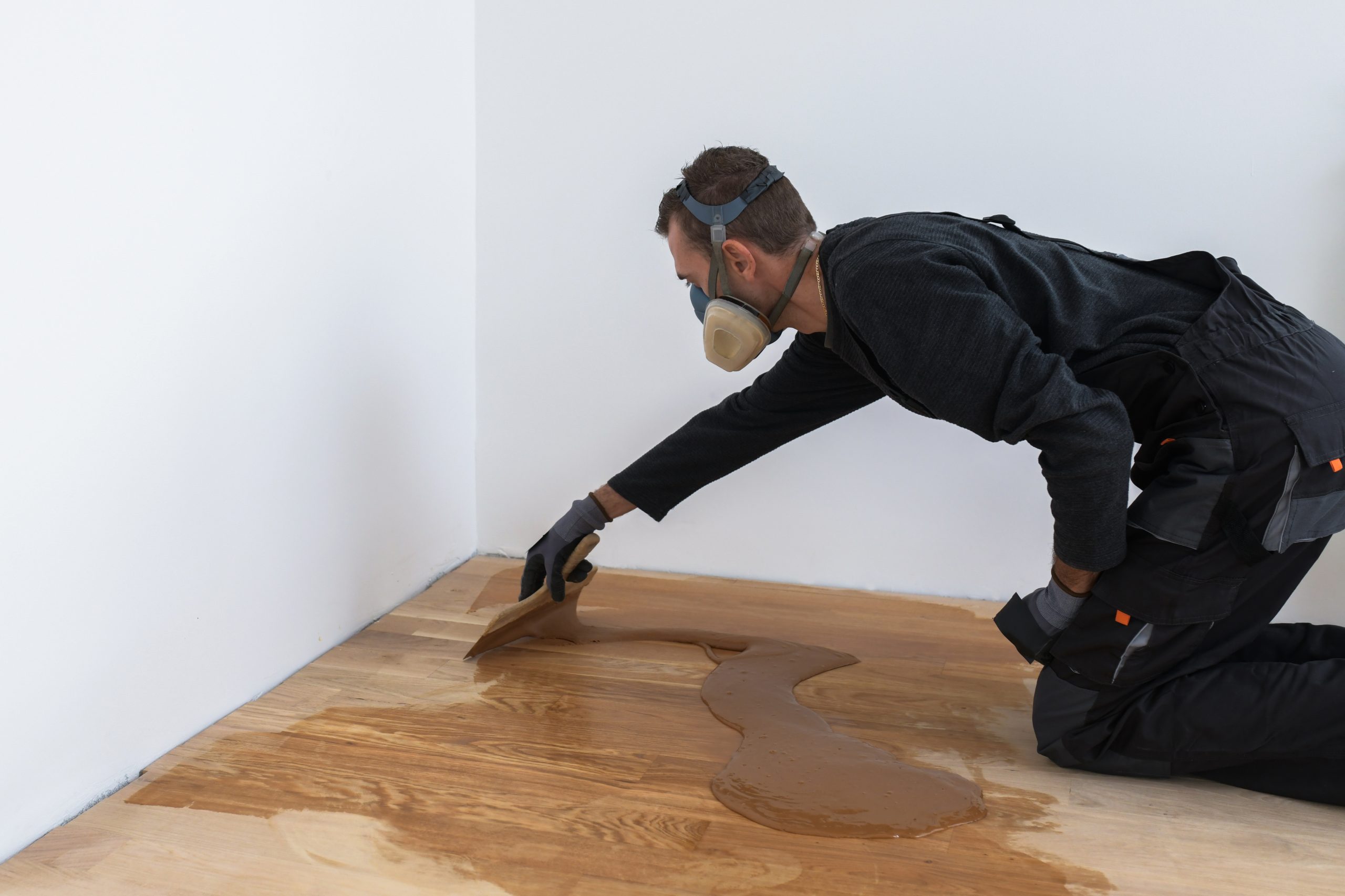
This is where trained hands pay dividends. A craftsman knows how to keep colour even across a quirky Victorian hallway and a wide contemporary living space, turning the concept of Wood Floor Staining into a finish that looks effortless.
Sealing the deal: how topcoats change the story
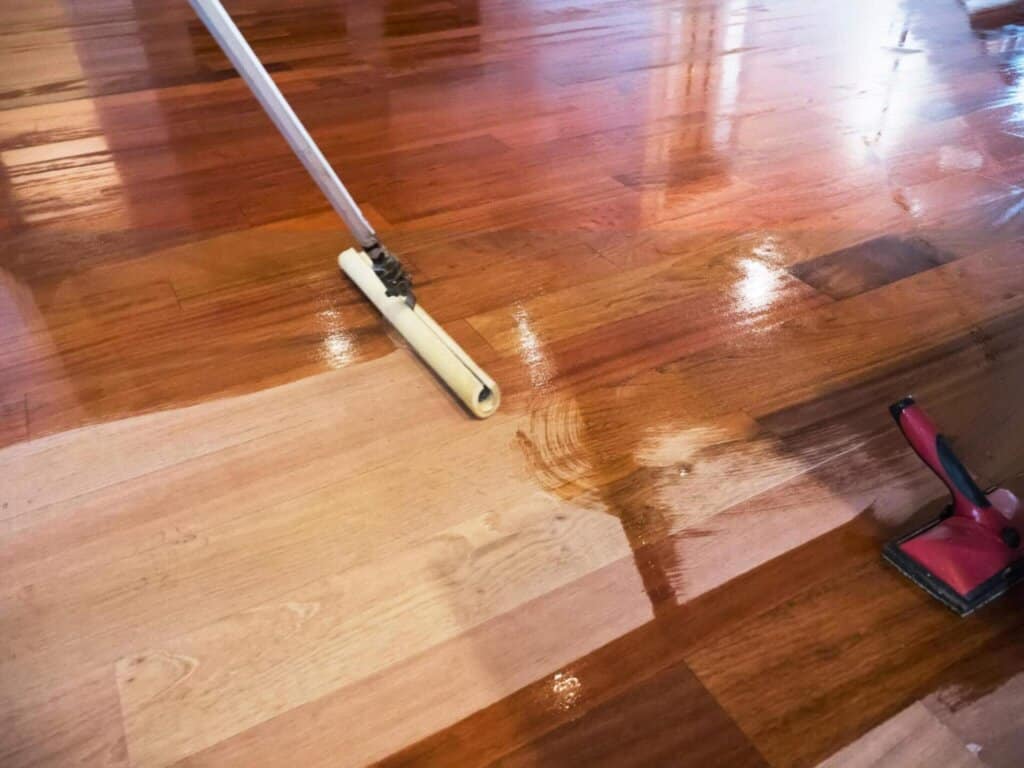
After colour, you’ll lock everything in with a protective system:
- Water-based polyurethanes. Clear, non-yellowing, available in matt to gloss; highly durable; good for busy homes and kitchens.
- Hardwax oils. Velvety, natural feel; localised repair possible; superb for low-sheen, character-rich interiors.
- Two-component systems. Catalyst-hardened options for commercial-level durability where pets, prams and parties take their toll.
Choose sheen to match your taste and housekeeping tolerance. Matt and satin read modern and forgiving; higher gloss reads formal and shows more imperfections.
Maintenance that’s realistic (and keeps the colour lovely)
Great news: protecting your investment isn’t complicated.
- Dry clean smart. Microfibre mop or a soft-bristle vacuum head for daily dust.
- Damp, not wet. Occasional light mopping with manufacturer-approved cleaner; avoid steam and harsh chemicals.
- Spot repairs. Many marks lift with a little cleaner and a white pad.
- Refresh coats. Depending on traffic and finish, a maintenance oil or a light screen-and-recoat keeps things looking new without starting from zero.
A sensible care routine preserves the tone you chose on day one, proving that good Wood Floor Staining isn’t fragile—it’s family-proof with the right finish on top.

Design playbook: matching tones to styles and rooms
1) Classic family kitchen-diner
- Tone: Warm mid-oak or gently smoked chestnut.
- Why: Enhances cabinetry in cream, navy, or sage; makes mealtimes feel cosy.
- Finish: Satin water-based polyurethane for easy wipe-downs.
2) Light, Scandinavian-leaning lounge
- Tone: Pale neutral with a whisper of beige rather than blue-grey.
- Why: Keeps the room bright and timeless; works with bleached woods and linen upholstery.
- Finish: Ultra-matt hardwax oil for a soft, tactile feel.
3) Elegant, art-forward sitting room
- Tone: Deeper espresso or “smoked walnut” effect.
- Why: Frames rugs and artwork, adds drama for evening entertaining.
- Finish: Low-sheen polyurethane to balance glamour with practicality.
4) Bedrooms for calm
- Tone: Soft ash or muted taupe.
- Why: Encourages rest; reduces visual noise with lighter walls.
- Finish: Matt, to diffuse light and hide dust.
5) Hallways that work hard
- Tone: Mid-tone with subtle variation.
- Why: Masks traffic patterns and grit from outdoors.
- Finish: High-durability two-component system; add rugs at entries.
Common myths (and the truth behind them)
“Dark floors always show everything.”
They show different things—dust more than scuffs. Medium tones with a little movement hide the widest range of everyday marks.
“You can’t make old pine look sophisticated.”
You absolutely can. With careful sanding, a thoughtful stain, and the right sheen, old pine becomes a textured, character-rich canvas.
“One coat is enough.”
Sometimes, but not usually. Uniformity and longevity often require staged applications and proper sealing. That’s where professionals make the difference.
“DIY saves a fortune.”
It can, but the cost of re-doing a patchy job (or lifting a bad colour) quickly dwarfs the saving. A skilled team turns the idea of Wood Floor Staining into a guaranteed result—first time.
Little touches that make a big emotional difference
- Thresholds & transitions. Carry the same tone across rooms for a generous, open feel—or introduce a subtle change where function shifts (kitchen to snug) to signal a new mood.
- Rugs as “islands.” Use rugs to add softness underfoot and protect main walkways without hiding your timber.
- Sheen choreography. A slightly lower sheen in bedrooms can make mornings feel gentler; a fraction higher in hallways can bounce light through darker spaces.
- Natural texture elsewhere. Balance a richly coloured floor with nubbly textiles, soft curtains, woven baskets; the home will feel layered, not “matchy”.
A short family story: from chilly to cherished
One client’s Victorian terrace had good bones but cold, echoey rooms. Pale, high-gloss boards emphasised scratches and somehow made the lounge feel like a waiting room. We repaired a handful of loose pine boards, sanded carefully to keep the character, and created three test swatches. They chose a mellow, mid-brown that nodded to the home’s age without going gloomy. Sealed in a satin system, the lounge suddenly felt dignified yet inviting.
Two weeks later we received a message: “We’re actually using the room now—homework on the rug, tea with grandparents, even the dog naps there in the sun.” That’s the real magic of a good colour and a good process—not just prettier photos, but a change in how a family lives together. When handled by experienced hands, Wood Floor Staining becomes less of a “finish” and more of a habit-forming design nudge.
Final word: invest in the feeling, not just the finish
Great floors do more than look good. They change how you move, gather, and rest. Thoughtful colour underfoot warms the conversation, flatters your favourite furnishings, and sets the stage for daily rituals that feel just a bit more special. When you approach the process with testing, craftsmanship, and an eye for how your family truly lives, you’ll end up with something that feels inevitable—like the house had been quietly asking for it all along.
If you’re ready to translate ideas into a floor you’ll love for years, bring in a professional team, test diligently, and choose a finish that fits your lifestyle. The result? A home that greets you, holds you, and makes room for the best kind of mess: life, shared.