| Key Takeaways |
|---|
| Victorian pine restoration requires a technical grit sequence starting with 40-grit Zirconia for uneven boards. |
| Gap filling with resin and clean sawdust is essential for thermal efficiency and reducing draughts. |
| High-end finishes like Bona Traffic HD offer the best durability in UK humidity. |
| Always check moisture content and acclimatise timber before sealing to prevent movement. |
UK heritage homes, particularly Victorian and Georgian properties, often hide beautiful original timber floorboards beneath decades of carpet and underlay. However, the path to a high-end finish is fraught with technical challenges that the average DIYer or general tradesman might overlook. Restoring Victorian pine is not just about sanding; it is a meticulous process of heritage restoration that requires a deep understanding of timber behaviour, moisture content, and chemical compatibility.
The Problem: Uneven, Gappy, and Drafty Heritage Floors
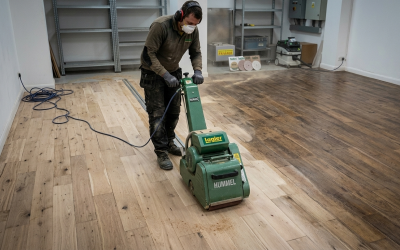
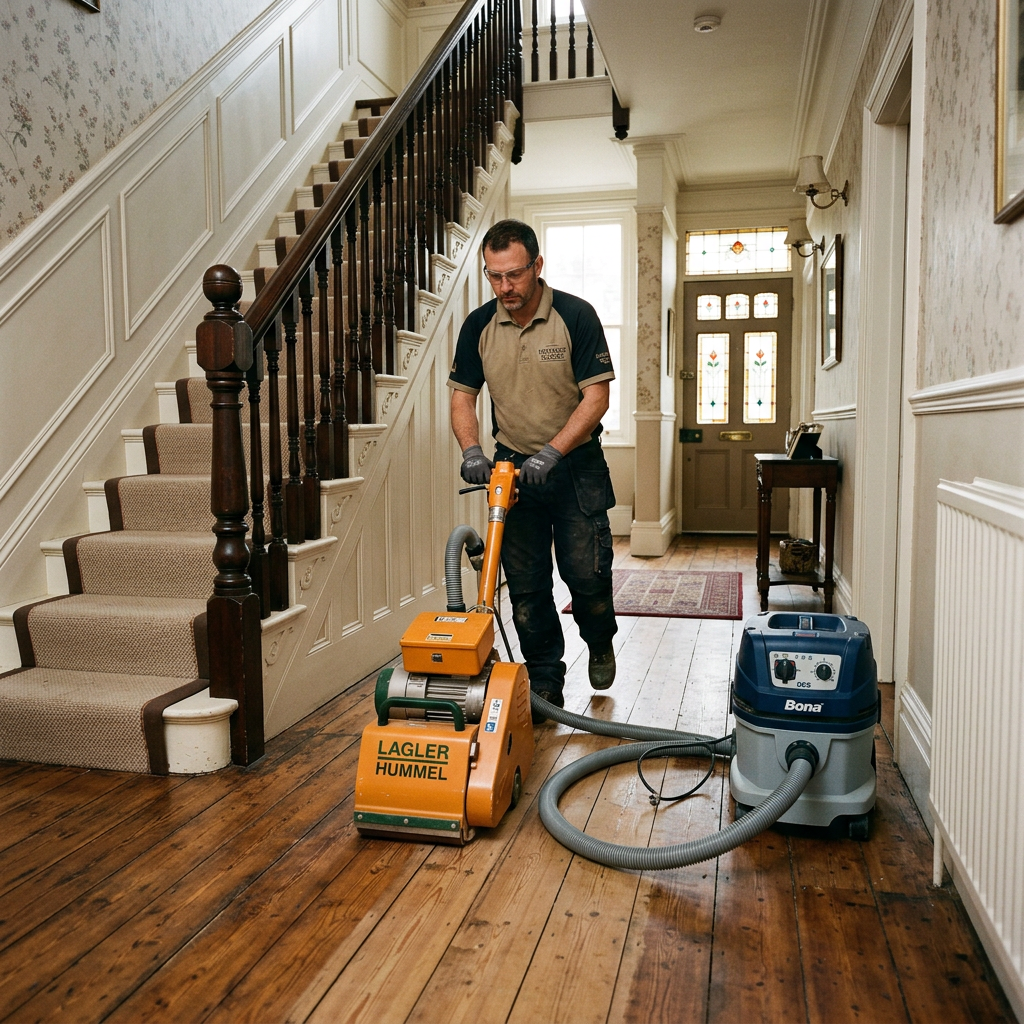
Many homeowners in the UK face the same frustration: original floorboards that look ‘orange’, feel cold to the touch, and allow significant heat loss through large gaps. Over 150 years, these pine boards have cupped and bowed, making them notoriously difficult to level without professional-grade machinery like the Lagler Hummel or Bona Belt sander. The agitation begins when you realise that a standard rental sander often creates more damage—scratches, ‘chatter marks’, and uneven troughs—than it solves, potentially ruining a historic asset that has survived since the 19th century.
The Solution: Professional Dust-Free Sanding and High-Performance Sealing
The solution lies in a structured, professional approach using high-efficiency dust-extraction systems. By employing a dust-free setup, we ensure that your heritage home remains clean while we refine the timber surface. A key part of this process is the grit sequence. For uneven Victorian pine, we typically start with 40-grit Zirconia belts. Zirconia is preferred for its durability and ‘bite’ on tough, historic finishes. We then progress through 60, 80, and 100-grit, ensuring every scratch pattern from the previous pass is removed.
Pro-Tip: Grit Sequence and Zirconia Abrasives
When dealing with stubborn bitumen or old oil paint common in Victorian hallways, do not start with a fine grit. Starting with 40-grit Zirconia allows you to flatten the floorboards without burning the wood. If the boards are severely cupped, we may sand at a 45-degree angle to the grain for the first pass to ensure the floor is perfectly level before switching to inline sanding.
Managing Moisture and Tannin Pull in UK Humidity
One of the most critical stages in UK restoration is managing moisture content. Pine is a softwood and highly reactive to changes in humidity. Before applying any finish, we use a professional moisture meter to ensure the timber is between 8% and 12%. Applying a finish like Bona Traffic HD or Osmo Hardwax Oil on a damp floor will lead to failure, clouding, or premature peeling. Furthermore, ‘water popping’—a technique where we lightly mist the floor with water to open the grain—is used when a deeper stain penetration is required, ensuring a uniform look across the varied grain of Victorian pine.
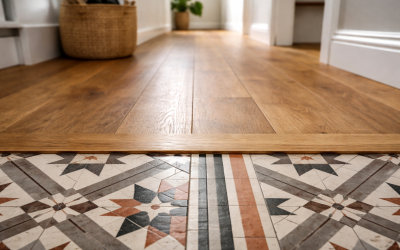
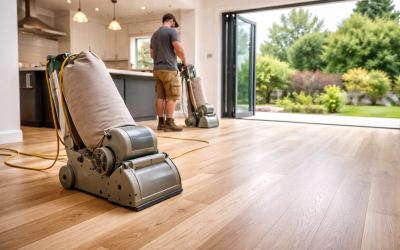
For those looking to achieve a seamless look across their ground floor, consider how these boards meet other materials. Our guide on seamless floor transitions provides excellent insight into bridging the gap between Victorian tiles and restored timber. Additionally, if your extension features newer boards, you may want to compare how sanding engineered oak differs from the heritage pine restoration discussed here.
Finishing with Bona Traffic HD and VAT Considerations
For domestic environments with high traffic, we recommend three coats of Bona Traffic HD. This water-based lacquer is renowned for its durability and low VOC content. In the UK climate, curing times can vary; generally, it is touch-dry in 2-3 hours, but we recommend waiting 24 hours before light foot traffic and a full 7 days for a 100% cure. Note that professional restoration services are subject to VAT, but the long-term information gain and value added to your heritage property far outweigh the initial cost. For a deeper dive into the full restoration journey, see our guide to restoring 1930s wood floors.
If you’re ready to transform your home, trust the specialists at Floor Sanding Carshalton to deliver a finish that respects the history of your floorboards while providing modern durability.