| Key Takeaways |
|---|
| Water-based lacquers like Bona Traffic HD offer maximum spill resistance against alcohol and acidic liquids. |
| Hardwax oils (Osmo) provide a more traditional aesthetic and are easier to spot-repair without sanding. |
| ‘Water popping’ can enhance grain depth but may cause ‘grain raising’ if not handled correctly. |
| Hospitality venues should prioritize rapid-curing systems to minimize business downtime. |
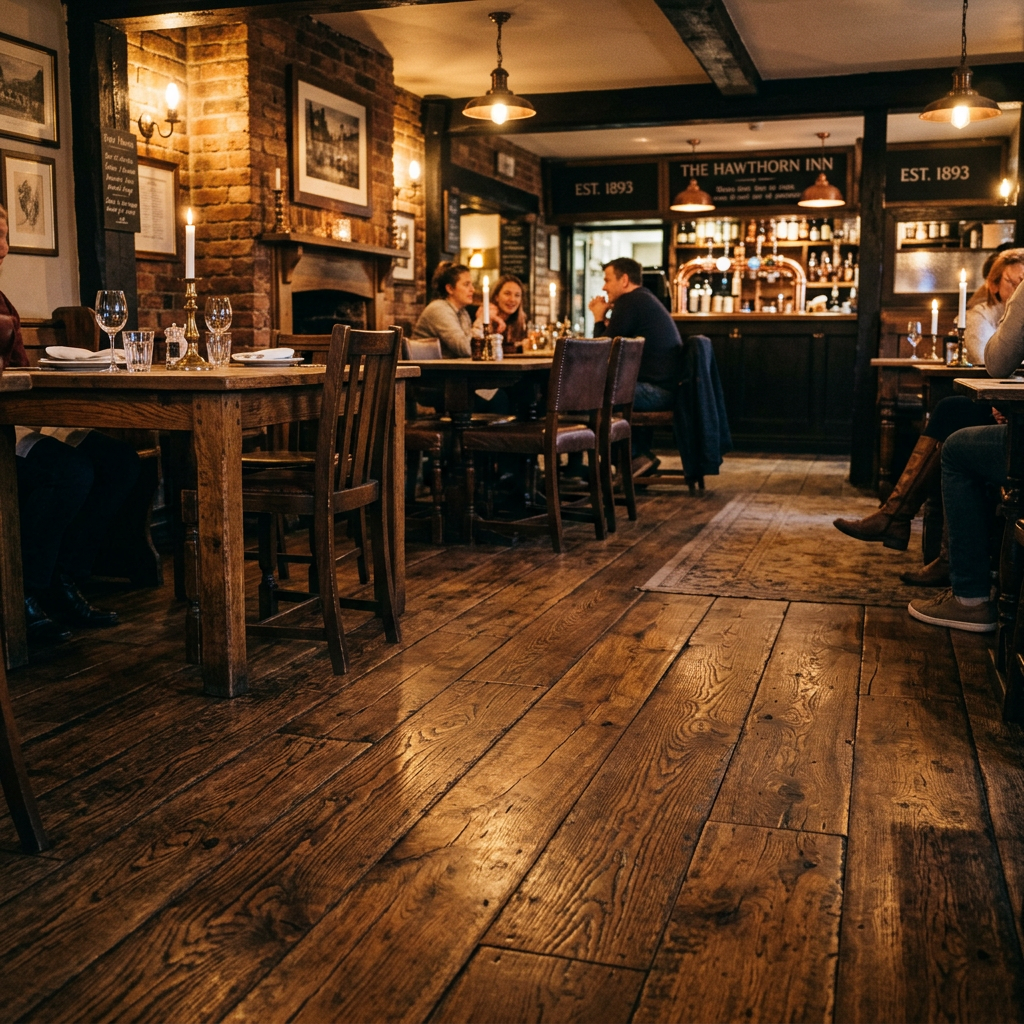
In the UK hospitality sector, the interior aesthetic of a gastropub or restaurant is a primary driver of ‘E-E-A-T’—Experience, Expertise, Authoritativeness, and Trust. A beautifully restored oak or parquet floor suggests a level of care and quality that extends to the menu. However, the high-traffic nature of these venues—combined with constant spills of beer, wine, and acidic foods—makes floor maintenance a constant struggle for tradesmen and owners alike.
The Problem: Scuffed Surfaces and Constant Liquid Exposure
The central problem for pub floors is the ‘tannin pull’ and ‘grain raising’ that occurs when wood is exposed to liquids. Over time, high-traffic lanes near the bar and entrance become scuffed and grey, as the protective coating fails and dirt is ground into the timber. Agitation grows when you realise that a traditional varnish might peel and flake, requiring a full, disruptive re-sand that costs both in terms of the ‘VAT’ and lost revenue during closure.
The Contenders: Osmo Hardwax Oil vs. Bona Traffic HD
When we specify a finish for a UK pub, the two primary contenders are Hardwax Oil (e.g., Osmo Polyx-Oil) and Water-Based Lacquer (e.g., Bona Traffic HD). Each has distinct advantages depending on the venue’s operational style.
Osmo Hardwax Oil: The Traditionalist’s Choice
Hardwax oil is a mixture of natural oils (sunflower, soybean, thistle) and waxes. It penetrates deep into the timber, providing a rich, organic look that enhances the natural character of oak floorboards. The main advantage for a pub is ‘local repairability’. If a small area near the entrance wears down, you can buff in a fresh coat of oil without having to sand the entire floor. This avoids the major agitation of a full shutdown.
Bona Traffic HD: The Heavy-Duty Champion
If your venue sees extreme footfall and frequent liquid spills, Bona Traffic HD is the superior technical solution. It creates a tough, film-forming barrier on top of the wood that is nearly impenetrable to liquids. While you cannot spot-repair it as easily as oil, its sheer longevity means you may only need a full sand once every 5-10 years, compared to the more frequent maintenance cycles of oil.
Technical Mastery: Water Popping and Grain Raising
To achieve a truly high-end finish in a commercial setting, we often use ‘water popping’. This involves applying a controlled amount of distilled water to the sanded floor. This ‘pops’ the grain, allowing the oil or stain to penetrate deeper and more evenly. However, tradesmen must be cautious of ‘grain raising’, where the fibres of the wood stand up, creating a rough texture. A professional buff with a 120-grit screen after the first coat of finish is essential to knock down these fibres and ensure a smooth-to-the-touch result.
Choosing the right finish for your bar area is a different challenge than, say, a domestic kitchen extension or a Victorian living room. For more technical details on how we bridge these spaces, see our post on hallway floor transitions.
Maximizing Information Gain: Pro-Tip on Maintenance
Never use ‘steam mops’ on a commercial wood floor. The forced steam can push moisture under the finish, leading to white spots or peeling. Instead, use a damp-mop system with the specific cleaner recommended for your finish (Bona Cleaner for lacquers, Osmo Wash and Care for oils). For a reliable, local partner in heritage and commercial restoration, contact the experts at Floor Sanding Carshalton to discuss your project.